Five Fingers
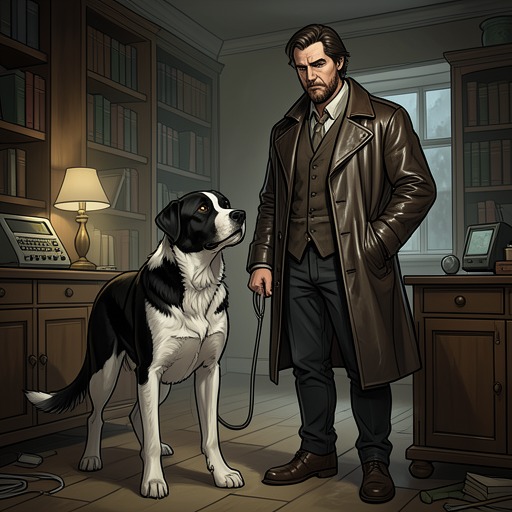
The Call of the WildFive Fingers is a hazardous landmark on the northern route whose significance lies less in settlement or human ownership than in the risks imposed by ice, distance, seasonal change, and the demands of transport. The name marks a point toward which Buck and his team struggle during their government mail journey, and it later becomes part of the landscape through which a starving expedition is carried toward disaster.
Location on the Northern Route
Five Fingers lies beyond the difficult country crossed by Buck, Perrault, and Francois during their early journey. Their route leads through the Canyon and Sheep Camp, past the Scales and the timber line, across glaciers and deep snowdrifts, and over the Chilkoot Divide before descending toward Lake Bennett. From there they make their way along the chain of lakes and onward through increasingly dangerous river country. After the team reaches the Hootalinqua River and good ice, Perrault drives them hard toward the Big Salmon, the Little Salmon, and then the Five Fingers.
The approach is measured by labor rather than by comfort. The team has already endured the Thirty Mile River, where open water, unstable ice bridges, and temperatures of fifty below zero make every mile a risk to both dogs and men. Perrault repeatedly breaks through the ice and must build fires to dry his clothing, while Buck and Dave are once dragged from the river half-frozen and nearly drowned. The route therefore presents Five Fingers not as an isolated scenic feature but as one stage in a continuous ordeal of frozen waterways, overloaded sleds, and enforced speed.
Buck’s Exhaustion at Five Fingers
By the time Buck’s team reaches the vicinity of the Five Fingers, the dogs are nearly spent. Perrault has pushed them late and early to recover lost time, and they cover thirty-five miles to the Big Salmon, another thirty-five to the Little Salmon, and forty more toward the Five Fingers. The numerical rhythm of these daily runs conveys the pressure of the mail service: distance is treated as a schedule to be conquered even when the animals’ bodies are failing.
Buck suffers especially from the trail. Unlike the huskies, whose feet have been hardened by generations of northern life, his feet remain comparatively soft because of his domesticated ancestry. He limps in agony throughout the day and collapses in camp, sometimes too exhausted even to move for his ration of fish. Francois rubs his feet for half an hour after supper and sacrifices the tops of his own moccasins to make four protective moccasins for Buck. The improvised footwear gives relief, and Buck later refuses to start when Francois forgets to put it on; only after his feet harden to the trail can the worn moccasins be discarded.
The Five Fingers in the Spring Disaster
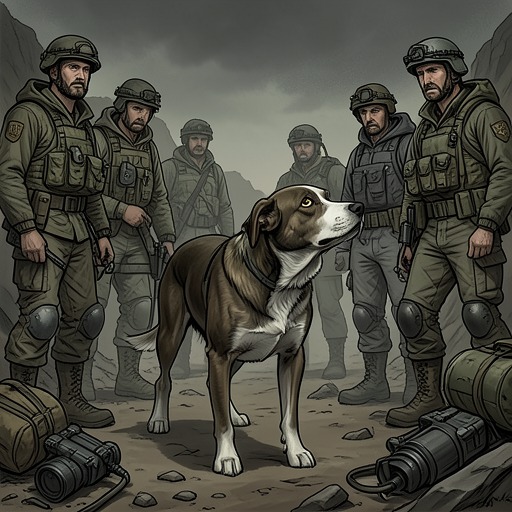
The landmark acquires a darker significance when Hal, Charles, and Mercedes pass through the region during the spring breakup. At the Five Fingers, their dog food runs out. A toothless old woman offers several pounds of frozen horsehide in exchange for Hal’s Colt’s revolver, but the hide is a disastrous substitute: frozen, it resembles strips of galvanized iron, and after thawing it becomes nutritionally useless hair and leathery fibers that irritate the dogs’ stomachs.
The failure of provisions exposes the expedition’s moral and physical collapse. Hal answers the animals’ weakness with a theory of hardening and enforces it with a club. Buck staggers at the head of the team, pulling when he can and lying down when he cannot, until blows force him upright. His coat loses its stiffness and gloss, his muscles waste into strings, and his ribs and bones show beneath loose, empty folds of skin. The other dogs become little more than bags of bones, dropping in the traces whenever the sled halts.
At this stage the landscape itself is turning toward renewal, but the travelers cannot share in it. Spring arrives in extended daylight, rising sap, budding willows and aspens, returning birds, singing crickets, and water running from every slope. The Yukon begins breaking apart under the combined pressure of sun and current. Against this great awakening, the two men, Mercedes, and the huskies move like travelers toward death, unable to respond to the season’s promise because hunger and exhaustion have reduced them to mechanical endurance.
Ecological and Narrative Significance
Five Fingers belongs to a route shaped jointly by human schedules and nonhuman forces. The mail journey follows the demands of government communication and gold-seeking movement, yet progress depends on the condition of dogs, the strength of ice, the direction of rivers, and the timing of the thaw. At the same time, the surrounding world remains active beyond the purposes of transport: migrating animals move with the seasons, and the changing river threatens every imposed timetable.
The place also stands near the boundary between civilization’s organized routes and the independent life of the wild. Earlier on the trail, starving huskies raid a camp because they smell food, and Buck witnesses the law of club and fang in which fallen animals are overwhelmed without fair play. Later, freed from human control, he hunts living prey, encounters a wild wolf, and ultimately meets the wolf pack in his valley. Five Fingers thus participates in the book’s larger geography of transformation: the same northern environment that turns dogs into exhausted instruments under human command can also become the setting in which Buck’s older instincts and wild affiliations emerge.
As a result, Five Fingers functions as both a geographical marker and a measure of human pressure on animal life. In Buck’s first passage, it marks the achievement of another punishing stage in a long, disciplined run. In the later passage, it marks the point at which inadequate preparation, cruelty, and seasonal misjudgment make survival increasingly impossible. Its narrative power comes from that contrast: the trail can be crossed by a trained team under competent leadership, but it becomes a mechanism of destruction when human ambition ignores the limits of bodies, food, and ice.